Close Menu
PSD VaultPSD Vault
  • VIP Area
  • Photoshop Basics
  • Photo Effect
  • Text Effect
  • Premium Tuts
  • Resources
  • Drawing
  • Inspiration
  • Web Graphics
  • Abstract
  • Freebies
  • Advertise
  • Get in Touch
  • About PSD Vault
Facebook Instagram Pinterest YouTube TikTok
Facebook Instagram Pinterest YouTube TikTok RSS
PSD VaultPSD Vault
  • VIP Area
    • Sign Up
    • Log In
  • Photoshop Basics
  • AI
  • Photoshop Error Fixes
  • Video Tutorial
  • Photo Effect
  • Text Effect
  • Premium Tuts
  • Drawing
  • Opinion
PSD VaultPSD Vault
Home»Basics»Photoshop Clipping Masks – Everything You Need to Know
Basics

Photoshop Clipping Masks – Everything You Need to Know

By Valentin PetroffJanuary 7, 20263 Mins Read
Share
Facebook Twitter LinkedIn Pinterest Email

If you follow my Photo Effect or Text Effect Photoshop tutorial here, you will notice I use a Photoshop function called “Clipping Masks” quite often. In this post, I will explain in-depth everything you need to know about Photoshop clipping masks, including its basic & advanced use. If you’re a Photoshop beginner, you will learn lots of about this powerful tool from this post.

What is Clipping Masks

Well, according to the official Photoshop site, a clipping mask is “a group of layers to which a mask is applied. The bottommost layer, or base layer, defines the visible boundaries of the entire group.” 

Sounds a bit complex for a beginner – I would suggest you put aside the definition for now, and go straight into practice mode.

Start by drawing a circle on a new document:

Then, add any image on top of the circle layer (I added this spaceship):

This is the layer order:

Then right-click on “layer 2”, click on “Create Clipping Mask”:
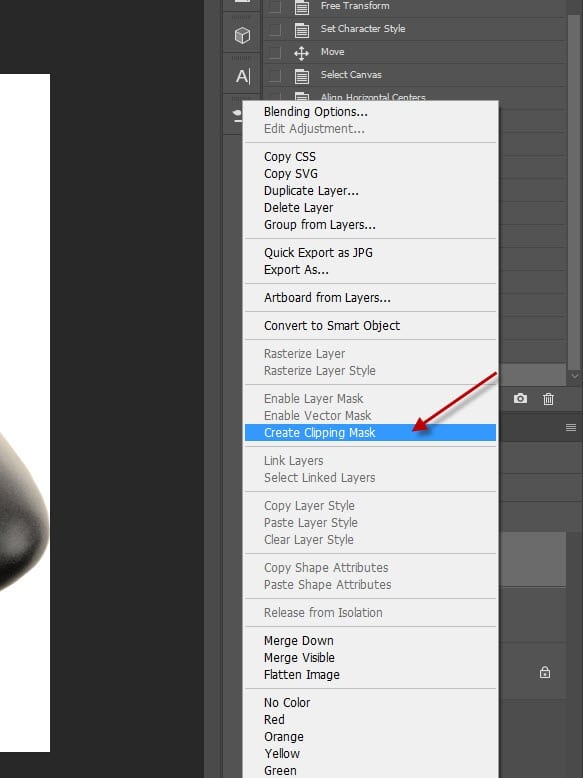
As you can see, the spaceship is now confined within the circle, which is the layer below the spaceship layer.

To release the clipping mask, right-click on the layer and click on “Release Clipping Mask”.

That’s the basics of using clipping mask. Simple, isn’t it? Now we’re onto some advanced clipping mask techniques.

Combine Clipping Mask & Layer Blend Mode

Now you understand how to set up the clipping mask, you may wonder: “can I apply some layer blend modes to the clipping mask”? The answer is YES.

To demonstrate the use of blend mode, here I have a circle rock layer:

Simply double-click on the clipping mask layer and bring up the “Layer Style”, you can see all blend mode options are at your disposal:

I set the blend mode to “overlay”, and here is the effect:

Combining clipping mask and layer blend modes can produce great effect for your artwork. I encourage you to try a few blend modes and see what results they bring you.

Using Clipping Mask on Text

Clipping mask can also be used to create attractive text effect. Here we can some texts:

We add a rock texture over this text layer and set it as clipping mask:

And the end result is a rock text effect:

We can also apply layer blend mode on the clipping mask and this will make our text look stylish and unique. Go ahead and experiment! I have a handy tutorial below you can practice with:

How to Easily Apply Texture to Your Text in Photoshop with Clipping Masks

Using Clipping Mask on Adjustment Layer

Another clever use of clipping mask is that you can set it on an adjustment layer. By doing so, we can apply image adjustments to only the layer below the clipping mask, while leaving all other layer unaffected.

You will need to tick “Use Previous Layer to Create Clipping Mask” option when adding the adjustment layer:

As you can see, we now have the adjustment layer attached to the rock layer below:

Now when you adjust the settings, only the rock layer will be affected:

You can even add several adjustment layers as clipping masks to produce complex effect:

That’s it for this post! You now should have a much better understanding of Photoshop Clipping Mask. Make sure you practice what you learn from this tutorial and drop me a comment for any questions.

Till next time, have a great day!

clipping mask
Share. Facebook Twitter Pinterest LinkedIn Tumblr Email
Valentin Petroff
  • Website

My name is Valentin Petroff and I am a freelance graphic designer specializing in retouching and photo manipulation. As a graphic artist I always try to use maximum of my imagination, to improvise and to experiment with different techniques.

Related Posts

Dodge & Burn Tool in Photoshop – The Beginner’s Guide

January 24, 2026

How to Pixelate an Image in Photoshop

January 21, 2026

How to Resize Images Without Losing Quality in Photoshop

January 8, 2026

Comments are closed.

Don't Miss

Exploring Third-Party AI Models in Photoshop: Which One Suits Your Graphic Workflow?

January 26, 2026

Dodge & Burn Tool in Photoshop – The Beginner’s Guide

January 24, 2026

Create Fire Burning on Metal Text Effect in Photoshop

January 22, 2026

For Beginners

Basics

Dodge & Burn Tool in Photoshop – The Beginner’s Guide

By Maria SemelevichJanuary 24, 20268 Mins Read

How to Pixelate an Image in Photoshop

January 21, 2026

How to Resize Images Without Losing Quality in Photoshop

January 8, 2026

Neural Filters in Photoshop – A Beginner’s Guide (Updated Jan 2026)

January 7, 2026

You May Also Like

Basics

Dodge & Burn Tool in Photoshop – The Beginner’s Guide

By Maria SemelevichJanuary 24, 20268 Mins Read
Basics

How to Pixelate an Image in Photoshop

By Lana WilsonJanuary 21, 20264 Mins Read
Basics

How to Resize Images Without Losing Quality in Photoshop

By James QuJanuary 8, 20265 Mins Read
Facebook X (Twitter) Instagram Pinterest
  • About Us
  • Get in Touch
  • Advertise
  • VIP Area
  • Privacy Policy
  • Terms & Conditions
© 2026 PSD Vault. All Right Reserved.

Type above and press Enter to search. Press Esc to cancel.

Manage Consent
To provide the best experiences, we use technologies like cookies to store and/or access device information. Consenting to these technologies will allow us to process data such as browsing behavior or unique IDs on this site. Not consenting or withdrawing consent, may adversely affect certain features and functions.
Functional Always active
The technical storage or access is strictly necessary for the legitimate purpose of enabling the use of a specific service explicitly requested by the subscriber or user, or for the sole purpose of carrying out the transmission of a communication over an electronic communications network.
Preferences
The technical storage or access is necessary for the legitimate purpose of storing preferences that are not requested by the subscriber or user.
Statistics
The technical storage or access that is used exclusively for statistical purposes. The technical storage or access that is used exclusively for anonymous statistical purposes. Without a subpoena, voluntary compliance on the part of your Internet Service Provider, or additional records from a third party, information stored or retrieved for this purpose alone cannot usually be used to identify you.
Marketing
The technical storage or access is required to create user profiles to send advertising, or to track the user on a website or across several websites for similar marketing purposes.
  • Manage options
  • Manage services
  • Manage {vendor_count} vendors
  • Read more about these purposes
View preferences
  • {title}
  • {title}
  • {title}